

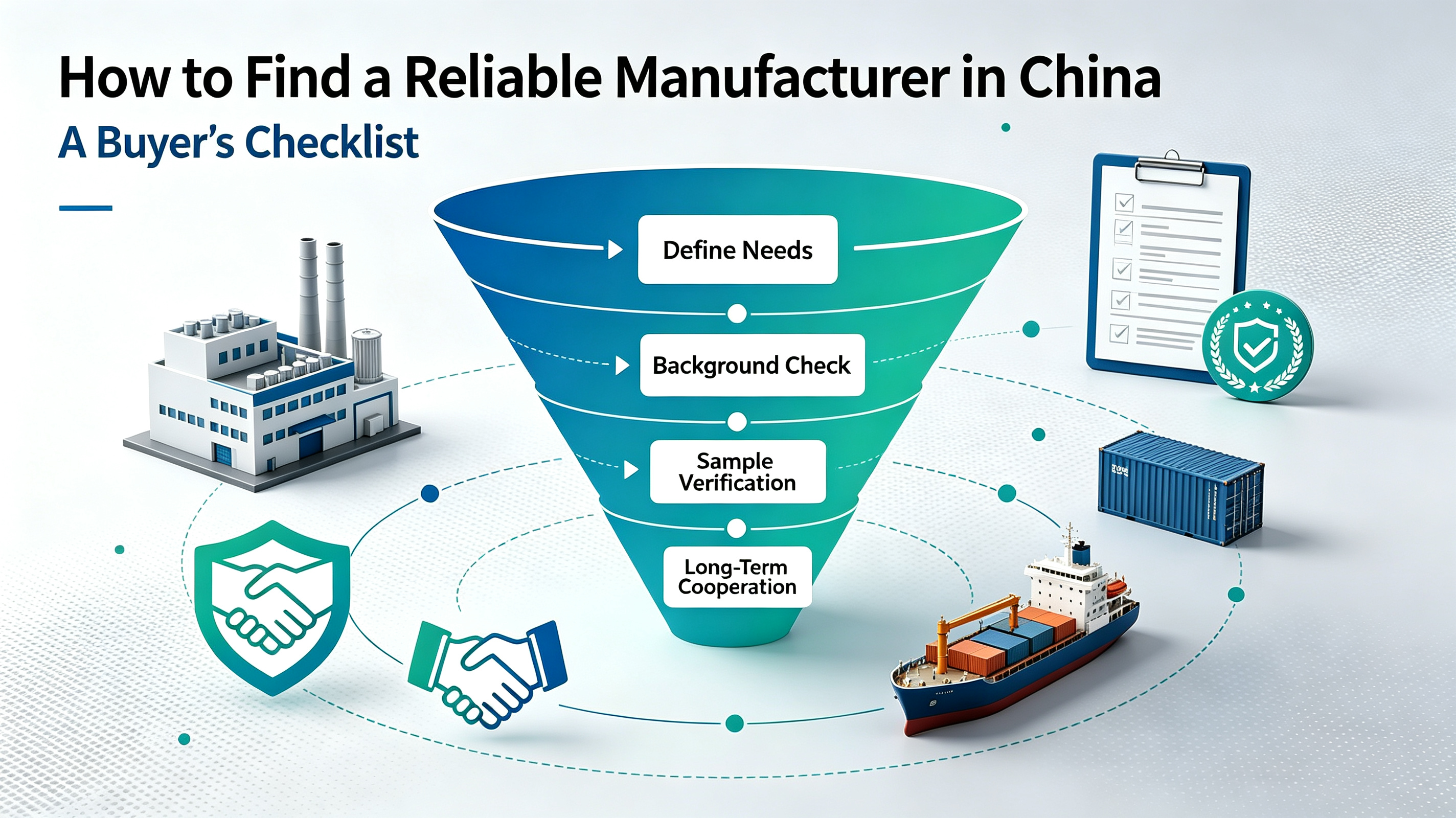
Most importers who get burned in China do not fail because of bad luck. They fail because they skipped steps. A factory looks professional on Alibaba, quotes fast, and sends a polished catalog. Two months later, the goods arrive with the wrong material, missing certifications, and no easy way to fix it.
Finding a reliable manufacturer in China is not about trusting your gut. It is about running a checklist, documenting what you find, and knowing when to walk away.
Before you contact any factory, write down exactly what you need. Include dimensions, materials, colors, packaging, certifications, and the market where you will sell. If you sell in the EU, say that upfront. If you need FDA or CE documentation, mention it in the first message.
Suppliers respond faster and quote more accurately when they see a clear brief. Vague requests attract factories that overpromise. Clear requests attract factories that know whether they can actually do the job.
Alibaba and Global Sources are useful starting points, but they are not the full picture. Consider these channels together:
● Industry-specific trade shows in China, such as the Canton Fair or CIFF
● Sourcing agents or trade service providers with a verified factory network
● 1688 for domestic manufacturers that may not list on export platforms
● Referrals from other importers in your niche
Each channel has a different risk profile. Export platforms are easy to search but crowded with traders posing as factories. Trade shows let you meet people face to face but require travel. Agents save time but need to be vetted themselves. A mix of channels gives you comparison points.
Request the supplier’s business license and verify its business scope covers manufacturing and export activities. Legitimate Chinese manufacturing entities follow standard local company‑naming conventions. Review key details including registered capital, founding date and official business scope. A factory registered very recently with low registered capital is not inherently fraudulent, yet it warrants extra caution during your due‑diligence process.
Next, confirm export qualifications. Not all Chinese manufacturers hold direct export rights. Some handle overseas orders through third‑party trading partners. This arrangement is perfectly acceptable, provided you clearly identify which party bears ultimate responsibility for product quality, official documentation and ongoing communication.
Use the National Enterprise Credit Information Publicity System or a service like Qichacha to confirm the company exists and is not in legal trouble. If the factory refuses to share basic registration details, stop there.
Product photos are cheap. Real production lines are not. Ask for:
● Photos or video of the workshop, not just sample rooms
● Machinery list and production capacity per day or week
● Quality control stations and testing equipment
● Existing clients or export countries
If possible, arrange a factory audit or ask a local agent to visit. A video call walkthrough is better than nothing. Pay attention to cleanliness, organization, and whether workers use proper safety gear. A messy workshop usually means messy documentation.
Order samples from at least two or three factories. The sample itself matters, but so does the process. Did they ship on time? Did the sample match the specs? Did they answer questions clearly?
Use this stage to test communication. If emails go unanswered for days or if answers are vague before you even place an order, expect worse after payment. Reliable manufacturers are usually direct about what they can and cannot do.
Some warning signs are obvious. Others are subtle. Be cautious if a supplier:
● Refuses to provide a business license or company registration
● Quotes far below every other factory with no explanation
● Pushes for 100% payment upfront on a first order
● Changes payment details after you agree on terms
● Offers brand-name products at wholesale prices
● Has no website, no address, or only a mobile number
Pressure to move fast is another red flag. A good factory does not need you to decide today.
Verbal promises mean almost nothing in a dispute. Before production starts, confirm in writing:
● Product specifications and tolerances
● Material standards and test reports
● Unit price, total order value, and incoterms
● Payment terms and schedule
● Production timeline and shipping deadline
● Quality inspection rights and defect handling
Keep emails, WeChat messages, and signed contracts in one folder. If something goes wrong, this documentation is your leverage.
The first order is a test. The second order is where you learn what a supplier is really like. Reliable manufacturers remember details, meet deadlines, and fix problems without disappearing. Once you find one, invest in the relationship. Visit when you can, pay on time, and give clear feedback.
A good manufacturer is not just a vendor. They are part of your supply chain.
Copyright @ Link your factory
SitemapBack to top
This website uses cookies to ensure you get the best experience on our website.



 E-mail
Comment
(0)